


Navigating towards net zero



The maritime industry has strict requirements for energy efficiency and noise control, whilst simultaneously having to ensure that material choices comply with IMO standards. Thomas Merton, Technical Manager at technical insulation specialist Armacell, sets out why innovation in insulation materials means that shipbuilders and refitters no longer need to make a trade-off in their route to IMO compliance.
The maritime industry’s commitment to reducing its environmental impact to achieve net zero whilst maintaining the highest safety standards represents one of the most significant challenges facing the sector today.
Until relatively recently, the challenge facing the industry was that the best-performing insulation products frequently didn’t meet IMO fire regulations, hindering attempts to reduce heat loss in pipework and other mechanical equipment.
Set against this is the fact that the shipping sector is facing unprecedented pressure to reduce its environmental footprint towards net zero. The International Maritime Organization (IMO) has already set ambitious targets to reduce greenhouse gas emissions by at least 50% by 2050 compared to 2008 levels. As a result, vessel operators are looking to find solutions that deliver both performance and compliance.
“Historically, fleet operators were caught between a rock and a hard place,” Merton explains. “They required materials that could withstand the harsh marine environment whilst delivering exceptional thermal performance, but traditional high-performance insulation often contained materials that simply didn’t meet the stringent fire safety requirements demanded by international regulations.
“The challenge becomes particularly acute in engine rooms and mechanical spaces, where temperatures can be above 60°C and humidity levels remain consistently high. In these demanding environments, every degree of heat loss translates directly into increased fuel consumption and higher emissions – a costly proposition both financially and environmentally.”
Understanding IMO fire regulations
The IMO’s fire safety regulations, particularly SOLAS Chapter II-2, establish comprehensive requirements for materials used in ship construction and equipment. These regulations mandate that insulation materials must pass rigorous flame spread tests and demonstrate low smoke generation characteristics.
Traditional high-performance insulation materials often rely on chemical compositions that, whilst excellent for thermal properties, can produce toxic gases or contribute to flame spread during fire incidents. This creates what the industry terms the ‘safety-performance paradox’ – the better the insulation performs thermally, the more likely it is to fail fire safety requirements.
“Until relatively recently, the maritime industry had been forced to choose between optimal energy efficiency and regulatory compliance,” notes Merton. “This compromise has real-world implications for both operational costs and environmental impact.”
Consider a typical container vessel: inadequate insulation on steam lines and hot water systems can result in heat losses of up to 15-20%, translating to thousands of tonnes of additional fuel consumption annually. For a large container ship using 200 tonnes of fuel per day, even a 5% improvement in thermal efficiency could save 10 tonnes of fuel daily – and a significant amount of CO2 over a year. (Source: IMO)
IMO-compliant insulation materials
“Our response to this industry challenge represents a significant technological breakthrough with NH/ArmaFlex Smart C material, combining advanced polymer chemistry with innovative manufacturing processes to deliver what was previously thought impossible: exceptional thermal performance alongside IMO-certified and classified C-s2,d0 (EN 13501-1),” Merton continues.
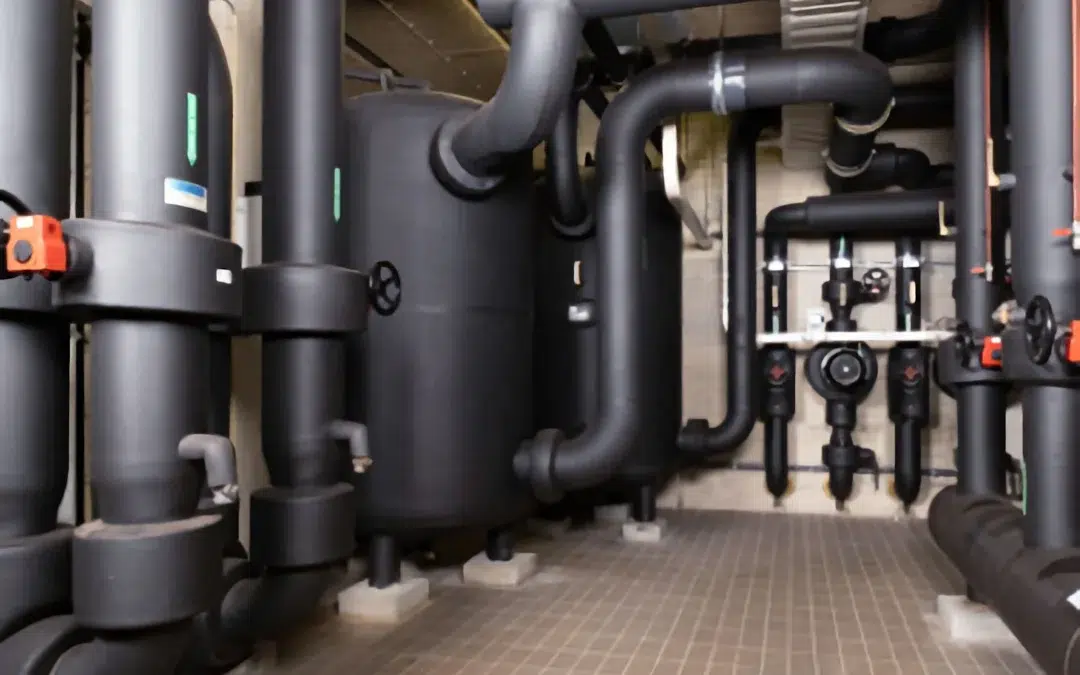
These new insulation materials perform best when they have a closed-cell structure because it provides resistance to moisture ingress – a critical factor in marine applications where condensation and humidity are an ongoing challenge. Being flexible helps shipbuilders because it allows for easy installation around complex pipework configurations commonly found in engine rooms and mechanical spaces.
“The pre-covering system over closed-cell insulation materials is particularly significant. It eliminates the need for separate jacketing materials whilst providing additional protection against mechanical damage and UV exposure – common issues in marine environments.”
Specifying a halogen-free formulation ensures that, even in extreme fire scenarios, the material will not produce the corrosive gases that can damage critical ship systems or pose additional risks to crew safety. This characteristic proves especially valuable in enclosed spaces where evacuation options may be limited.
Real-world applications
Early adopters of closed-cell insulation materials such as NH/ArmaFlex Smart have reported impressive results across various vessel types, both during newbuild and refits. These materials’ versatility extends beyond traditional pipework applications, and they are increasingly being specified for HVAC ductwork insulation in passenger areas, chilled water systems in refrigerated cargo spaces, steam distribution networks throughout the vessel and noise control applications in crew accommodation areas.
“What we’re seeing is a fundamental shift in how naval architects approach insulation specification,” Merton observes. “Rather than accepting compromises on thermal performance, they are demanding insulation materials that support their path to net-zero whilst meeting compliance requirements.”
The path to maritime net zero
The shipping industry’s journey toward net zero emissions requires an approach that considers every aspect of vessel operation. Whilst alternative fuels and propulsion systems capture headlines, the role of effective insulation in reducing energy consumption cannot be overstated.
Advanced insulation materials contribute to net zero goals through multiple pathways: direct fuel savings through reduced heat loss, improved HVAC efficiency reducing auxiliary power requirements, enhanced crew comfort potentially reducing accommodation energy demands, and extended equipment life through better temperature control.
Industry analysts suggest that widespread adoption of high-performance, compliant insulation materials could contribute to a 2-3% reduction in overall fleet fuel consumption – a significant step toward meeting IMO emissions targets.
As the maritime industry continues its transformation toward sustainability and net zero, the demand for innovative materials that balance performance, safety and environmental responsibility will only increase. Advances in new insulation materials demonstrate that the traditional trade-offs between thermal performance and regulatory compliance need no longer constrain vessel designers or refit companies.
“We’re entering an era where material innovation will play a crucial role in achieving the industry’s ambitious environmental goals,” Merton concludes. “The challenge now is ensuring that these advanced solutions reach widespread adoption across the global fleet.”